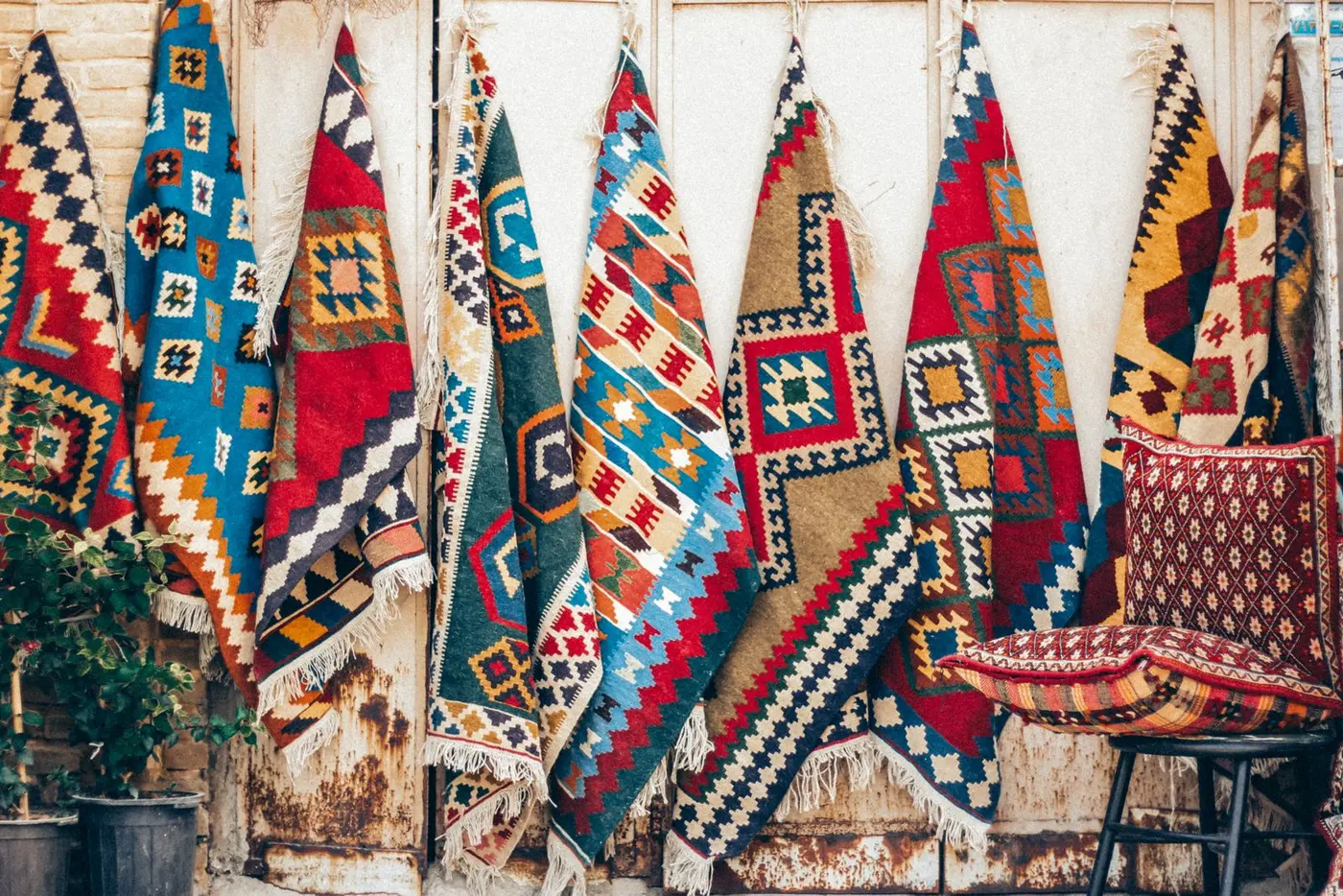
If you are going to build an import business on one origin country, the choice deserves scrutiny. Rugs are woven in Turkey, Iran, Nepal, Pakistan, Morocco, China and beyond — yet India supplies roughly 40% of the world's handmade carpet exports. That share is not an accident. Here is the case, stated plainly by an interested party.
Breadth No Other Origin Matches
India produces every major construction — hand-knotted, hand-tufted, handloom, flatweave dhurries and kilims — across every major fibre: wool, cotton, jute, viscose, bamboo silk, recycled PET. One country, often one factory, can supply an entire range. Most competing origins specialise narrowly.
The Price-to-Craft Ratio
Indian hubs like Bhadohi combine generational skill with production costs that keep genuinely handmade goods at accessible wholesale prices. Iranian and Turkish pieces command collector premiums; Chinese production is increasingly machine-led. India holds the widest band of the market: real handwork at prices a small importer can retail profitably.
Export Infrastructure That Works
India's carpet belt has exported for generations: established freight corridors through Mundra and Nhava Sheva ports, exporters fluent in documentation, and trade-fair institutions like the India Carpet Expo. Several markets also apply favourable duty treatment to handmade Indian rugs — confirm current rates for your HS code.
Compliance You Can Verify
Serious Indian manufacturers carry third-party verification — Sedex membership, Higg Index assessment — that Western retail increasingly demands. Ask any prospective supplier, in any country, for their audit trail; the answers will sort the field quickly.
We have made the case; the samples make it better. Request a sample set from our Bhadohi facility and compare against any origin you like.