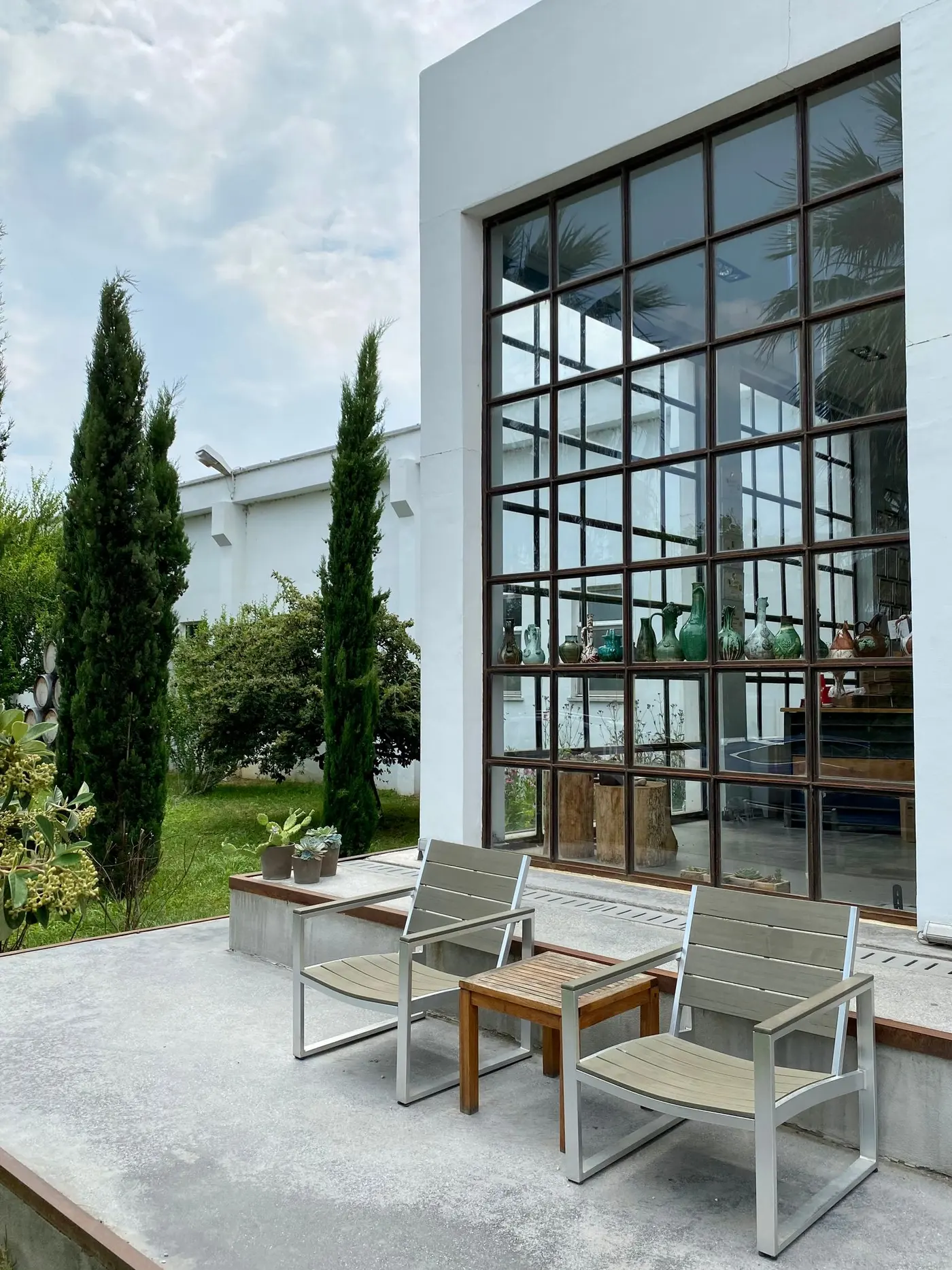
The outdoor room is now a fixture of homes from Brisbane to Dubai to California — furnished, styled and expected to look as considered as the living room it extends. Rugs complete these spaces, but outdoors is a hostile environment for textiles. Here is how to choose pieces that thrive in it.
Fibre Decides Everything
Outdoors, material is destiny. Solution-dyed recycled PET and polypropylene shrug off rain, sun and pool splash — colourfast, mould-resistant, hoseable. Natural jute and wool, whatever their indoor virtues, absorb moisture and degrade in weather; keep them under solid cover at most. The good news: modern PET yarns convincingly imitate wool's matte hand and jute's braided texture, so the natural look survives even where natural fibre cannot.
Construction for Exposure
Flatweaves and low piles dry fast and resist wind-borne grit; dense weaves stop debris embedding. Edges matter doubly outdoors — tight overlocked binding survives; loose finishes fray by season's end. Reversibility is a quiet bonus: flip the rug and double its face life.
Placement and Care
- Allow drainage: rugs on decking or stone should dry from beneath; avoid trapping water against timber.
- Shake or hose regularly; let dry fully before re-laying.
- In monsoon or winter, roll and store covered pieces — even weatherproof rugs age faster wet and frozen.
Style Notes for 2026
Outdoor rugs follow indoor trends at one step's distance: warm neutrals and terracotta stripes, chunky faux-natural textures, and generous sizes that zone dining and lounge areas distinctly. Coordinating indoor and outdoor rugs across a threshold visually doubles both spaces.
Our outdoor collection is handwoven in Bhadohi from recycled PET — craft aesthetics engineered for weather. See the outdoor range, or request a sample and leave it in the garden for a week as the test.