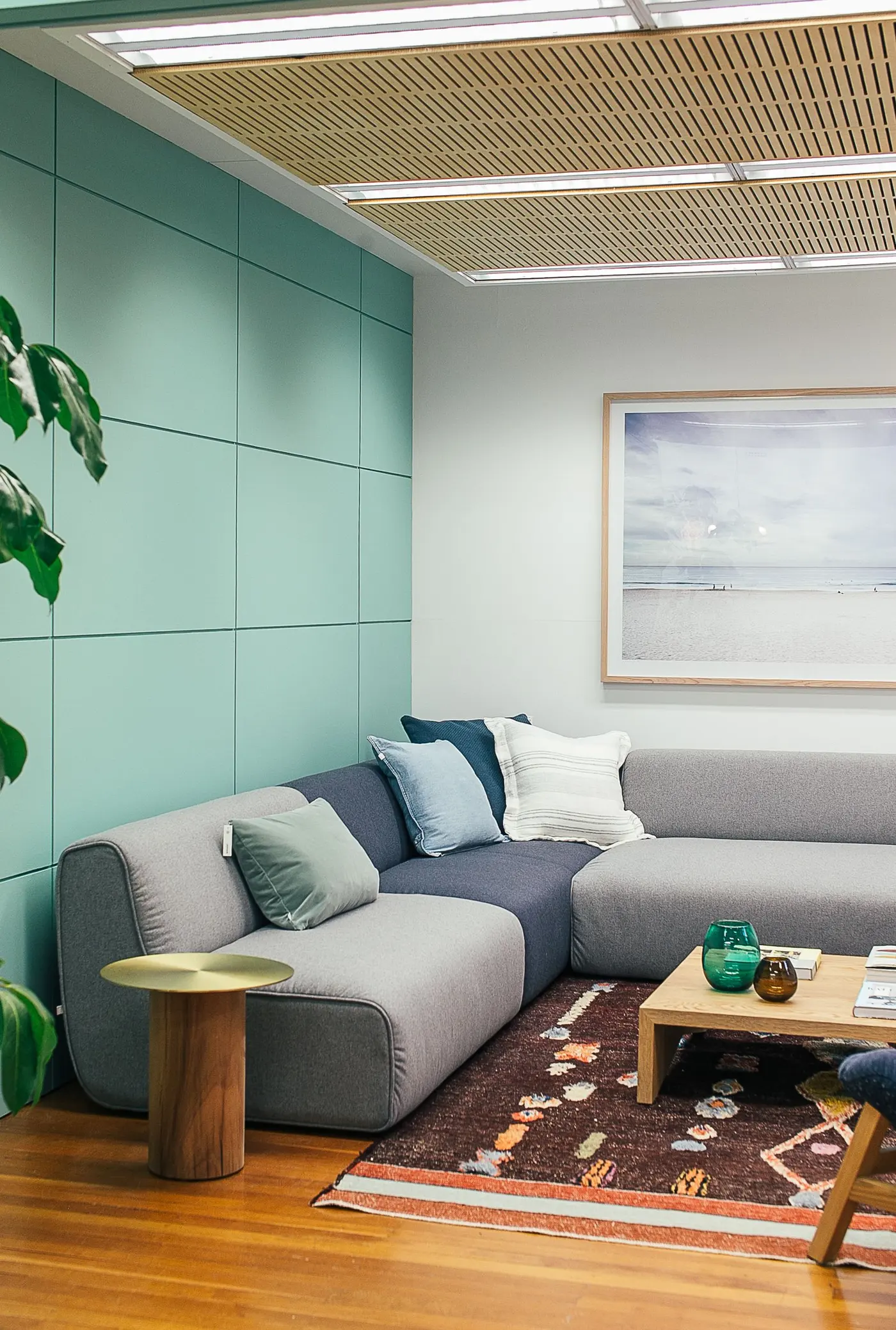
The living room rug works harder than any other textile in the house: it anchors the furniture, defines the seating zone, absorbs the traffic and sets the room's tone. Choosing it well is a sequence of decisions — size, construction, fibre, colour — and taking them in order makes the outcome almost foolproof.
Size First, Always
Start with the seating plan, not the rug. All key furniture legs on the rug is the ideal; front legs at minimum. In most living rooms that means beginning the search at 200×300cm — smaller pieces belong in bedrooms or layered arrangements. Under-sizing to save budget is the falsest economy in interiors.
Construction for Real Life
Living rooms are moderate-to-heavy traffic, so construction matters. Dense hand-tufted pile balances softness with resilience and offers the widest design range. Handloom weaves bring the fashionable textural look at accessible prices. Hand-knotted pieces suit rooms where the rug is the long-term investment centrepiece. Deep shaggy pile is best reserved for low-traffic, lounge-heavy rooms.
Fibre for the Household
Wool is the living-room default for good reason: resilient, soil-hiding, warm and long-lived. Wool-viscose blends add sheen for more formal rooms. Jute and wool-jute blends deliver the natural, layered look — happiest in drier climates and shoe-free homes. Households with pets and children should prioritise wool or blends with pattern or tonal texture that forgives daily life.
Colour Strategy
Warm neutrals — sand, oat, camel, clay — dominate current schemes and resell reliably. Earth-toned patterns (terracotta, sage, ochre) bring personality without shouting. Whatever the palette, textural variation keeps a plain rug from reading flat.
We weave living-room rugs across all these constructions in Bhadohi, in standard and custom sizes. Browse the collections or request samples to test colours in your own light — the only test that counts.