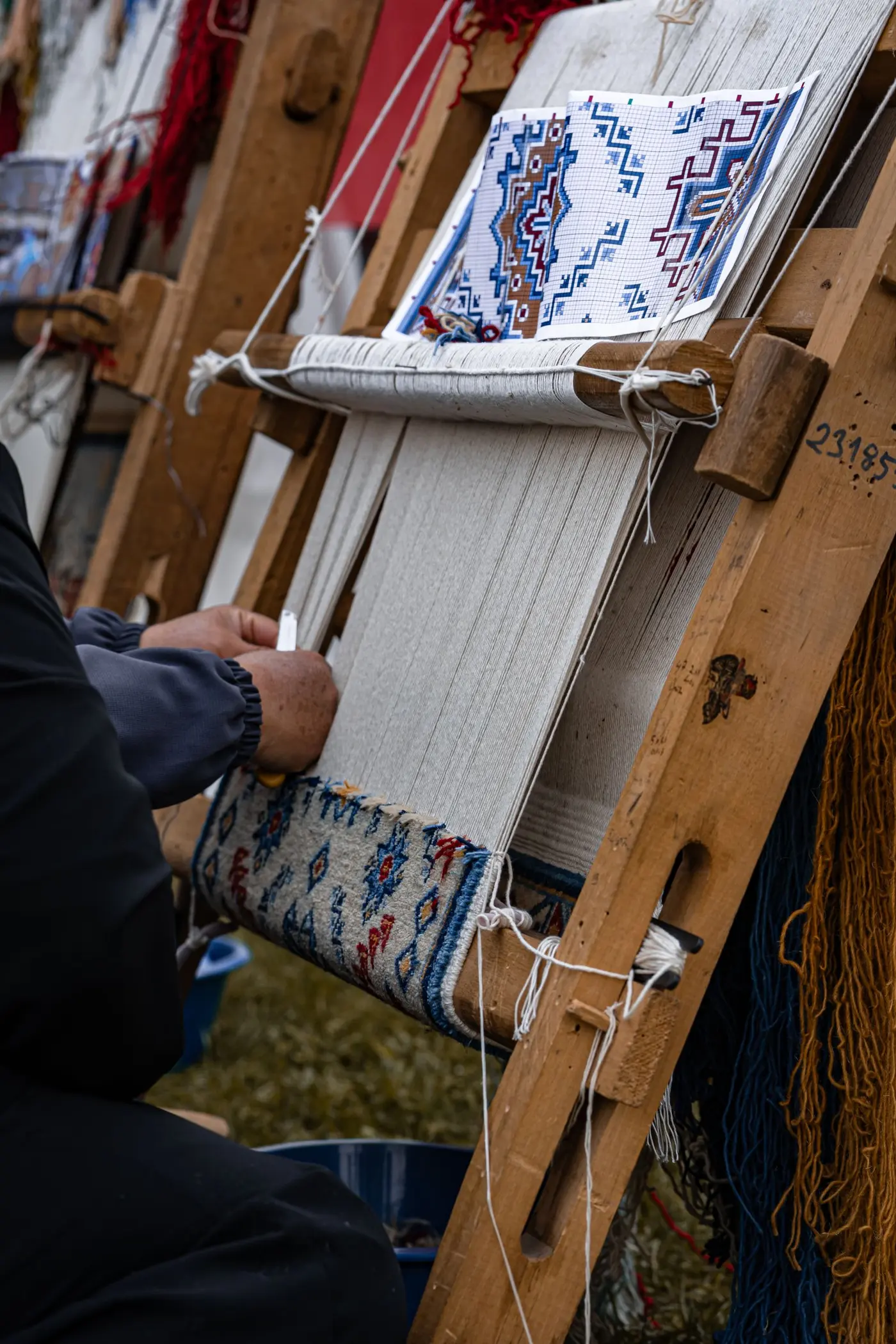
Hand-knotting is the summit of rug-making: every centimetre of pile built from individual knots tied by hand around the rug's foundation threads. It is also the technique most surrounded by jargon — knot counts, KPSI, Persian versus Tibetan knots — that buyers are expected to nod along to. Here is what the numbers actually mean.
How a Knotted Rug Is Built
A vertical loom is dressed with warp threads. The weaver ties a knot of coloured yarn around adjacent warps, cuts it, and moves to the next — following a design chart line by line. After each row of knots, one or more weft threads are beaten down to lock the row. The cut ends of the knots form the pile. A single mid-sized rug involves hundreds of thousands of these hand movements; fine pieces run into millions.
What Knot Count Really Tells You
Knots per square inch (KPSI) measures fineness: more knots mean crisper curves, finer detail and denser pile. Around 60–100 KPSI suits bold, geometric designs; 150–250 renders detailed traditional patterns; beyond that lies collector territory. But count is not a quality score by itself — knot type, wool quality, dye work and finishing matter as much. A superbly woven 100-KPSI tribal rug outclasses a sloppy 200-KPSI copy every time.
Why Knotted Rugs Last Generations
Each knot is mechanically locked into the foundation — there is no adhesive to age, and worn pile can be repaired knot by knot. This is why hand-knotted rugs are resold, inherited and restored rather than replaced, and why they hold value like no other floor covering.
Specifying Hand-Knotted Today
Contemporary buyers use knotting for statement and luxury tiers: undyed wool minimalism, abrash-rich tonal fields, and heritage patterns recoloured for modern palettes. Bhadohi's knotting tradition runs deep, and our weavers execute both classic and contemporary work to specification. Ask about our hand-knotted programme — and request a knot-count comparison sample to feel what the numbers mean.