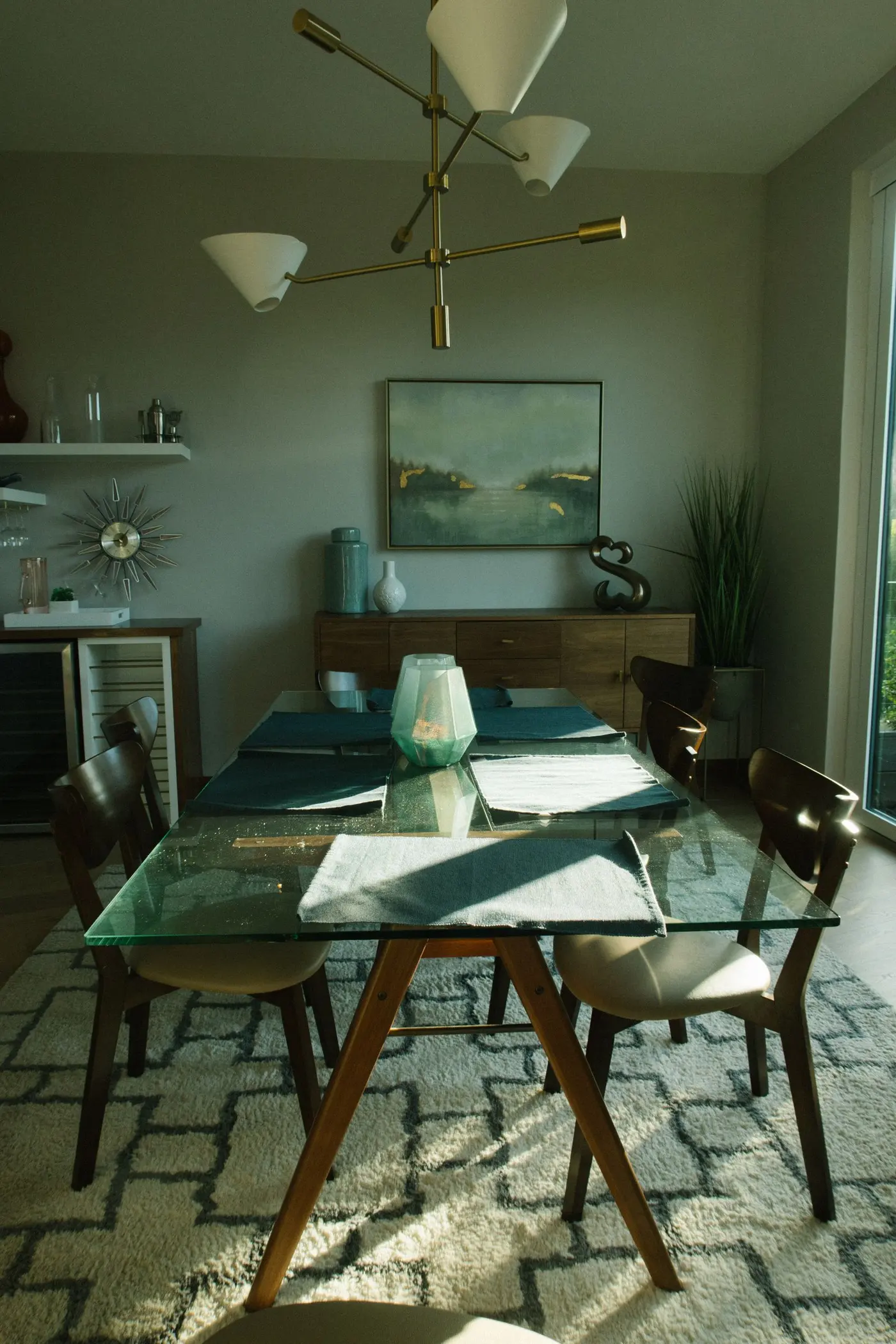
A dining room rug lives the hardest life in the house: chairs drag across it daily, food finds it weekly, and it must still look composed under the room's most social table. Specifying it correctly is a small engineering exercise — and completely solvable with four decisions.
Size Is Non-Negotiable
The rug must extend at least 60cm beyond the table edge on all sides — enough that chair legs remain on the rug even pulled out. Anything less and chairs catch the edge with every seating, wearing the rug and irritating the household. Take the table dimensions, add 120–150cm each way, and round up. Match shapes: rectangular with rectangular, round beneath round.
Go Low and Dense
Pile height is the key specification. Low pile (under 10mm) or flatweave lets chairs glide, cleans easily and hides crumbs less than plush pile traps them. Dense construction resists the concentrated wear of chair legs. This is why dhurries, kilims and low hand-tufted loop constructions are the dining category's quiet champions — and why deep shag has no business under a table.
Fibre and Colour That Forgive
Wool leads again: naturally stain-resistant, resilient, cleanable. Tight flatweave cotton works in casual settings and washes well at smaller sizes. Colour strategy is defensive — mid-tones, patterns and tonal textures camouflage life between cleans; pale plush cream is a decision you make once.
Style Within the Constraints
The constraints still leave room for beauty: bordered designs frame a table elegantly, allover geometrics energise modern rooms, and the current earth-tone palettes suit dining spaces warmly. In open-plan homes, the dining rug also zones the area — coordinate it with the adjacent seating rug rather than matching exactly.
We weave dining-appropriate constructions — flatweaves, dhurries, low dense piles — in-house in Bhadohi, sized to your table on request. Tell us your table dimensions and we will quote the correct rug around it.