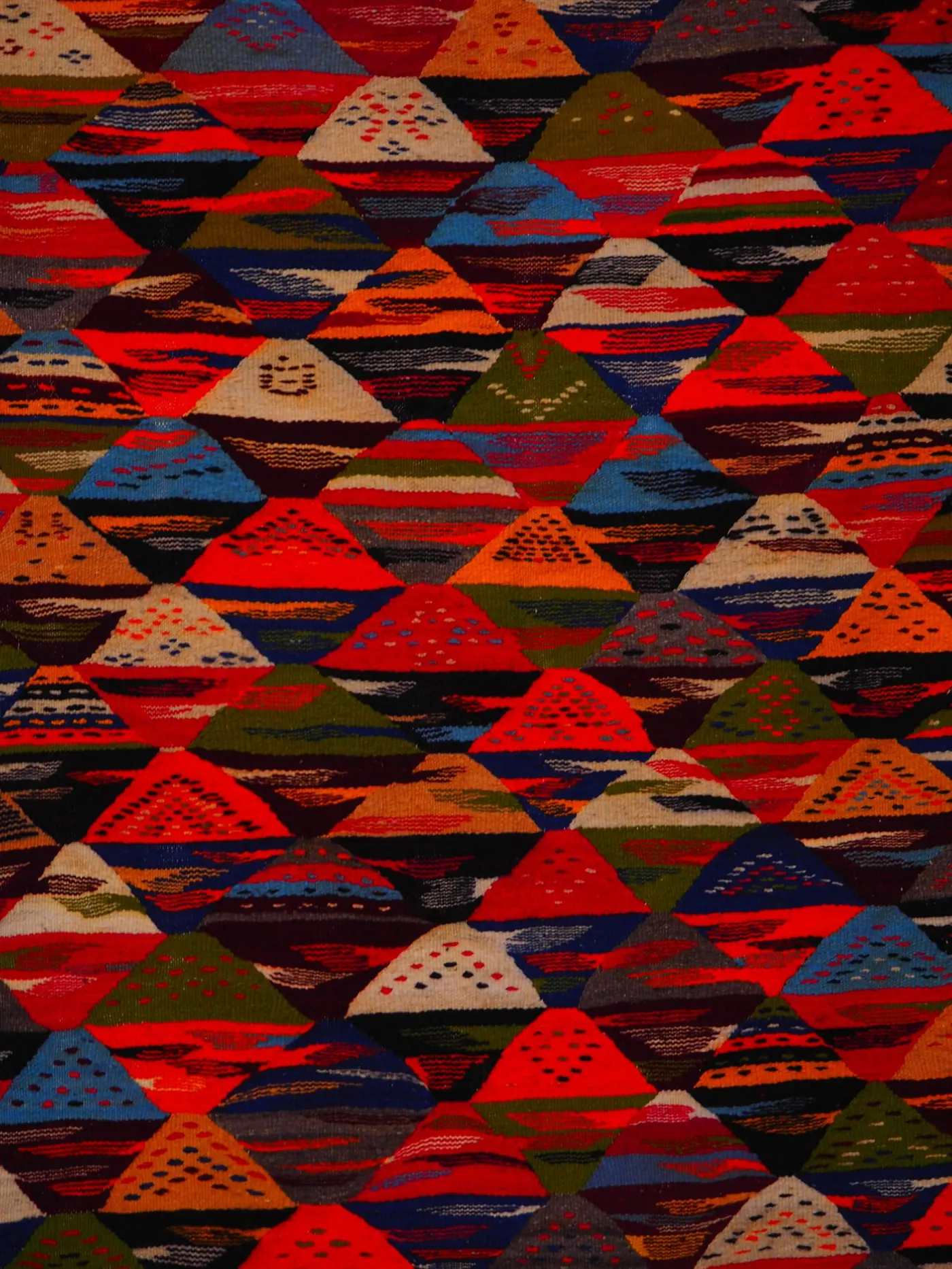
Every rug-weaving culture has its flatweave, and the dhurrie is India's — a cotton or wool tapestry weave with a lineage running from village floors to Mughal courts to the most photographed interiors of the moment. Understanding the dhurrie is understanding a uniquely Indian answer to the question of what a rug should be.
A Distinctly Indian Weave
Dhurries share the kilim's basic technique — weft-faced flatweaving — but developed their own identity: traditionally cotton rather than wool, woven in sizes from prayer mats to palace carpets, and patterned with stripes, lattices and geometric medallions in the clear, bright colours cotton dyes so well. Their flat, sturdy, reversible construction made them the everyday textile of Indian life for centuries — floor covering, bedding layer, celebration seating.
From Utility to Design Statement
The dhurrie's rediscovery by international designers began decades ago and has accelerated with every trend cycle that favours pattern, flatness and handcraft. Striped cotton dhurries anchor coastal and Scandinavian schemes; bold geometric dhurries carry maximalist rooms; wool dhurries in soft neutrals serve the modern organic look. Reversibility doubles their life, and their low profile makes them the layering base of choice.
How We Weave Them
Dhurries are woven on horizontal looms, the weaver beating each weft row tight with a comb-like panja. Precision matters: clean selvedges, square corners and even tension distinguish an export-grade dhurrie from a bazaar piece. Cotton yarns are dyed in-house to the palette; wool and blended dhurries follow the same discipline.
The Commercial Case
Dhurries offer retailers genuine handmade provenance at accessible price points, fast production relative to pile rugs, and easy shipping (they fold). For India-sourcing buyers they carry an authentic origin story no other flatweave can claim. Deepak Carpets weaves dhurries in Bhadohi alongside our pile collections — ask for the dhurrie colour card and a striped sample to start.