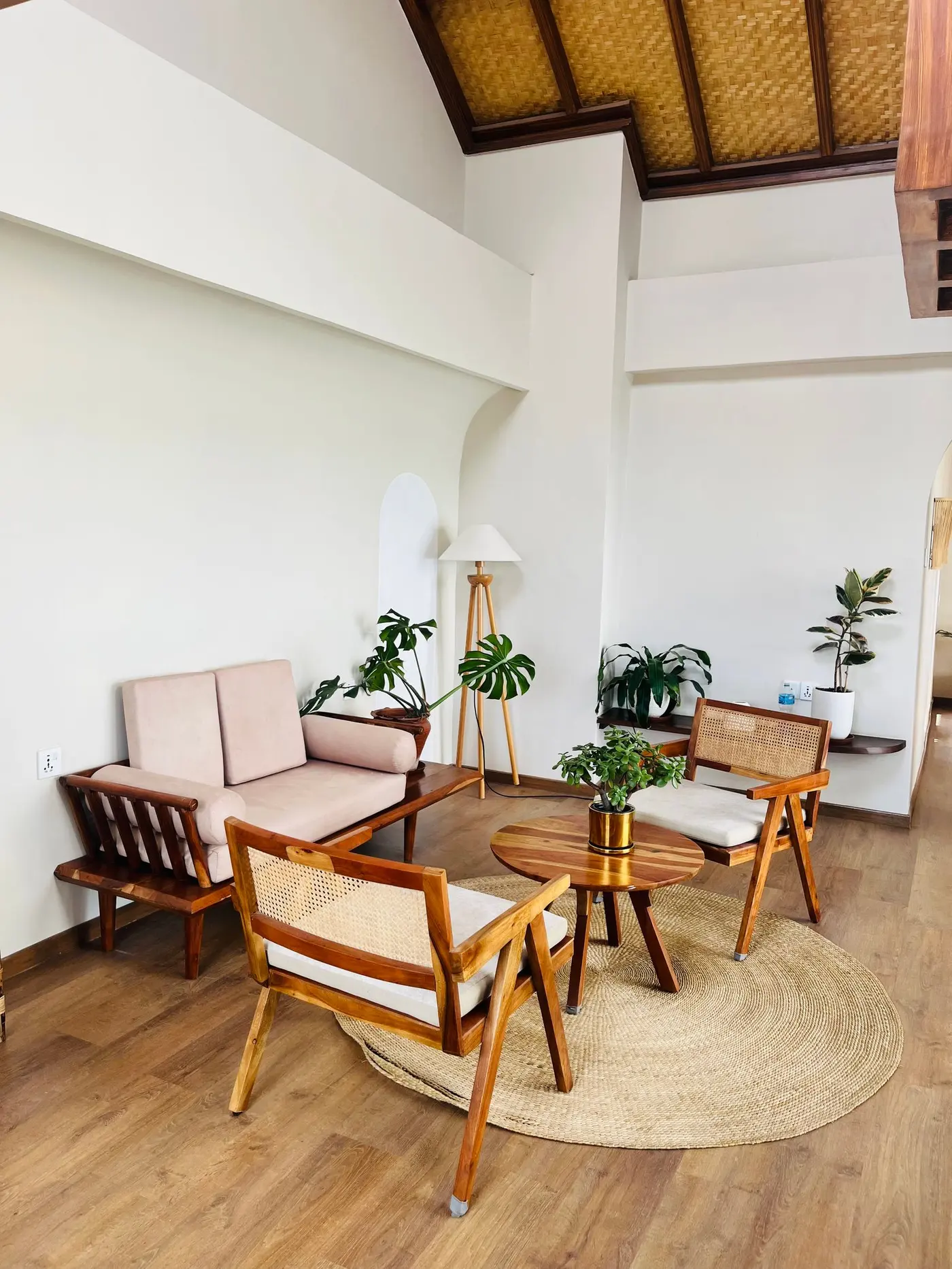
Biophilic design — the practice of connecting interiors to nature — has grown from an architectural theory into one of the strongest forces in consumer taste. Plants, daylight, natural materials and organic patterns now shape how homes, offices and hotels are designed. Rugs sit at the heart of it, because no other single object introduces as much natural material into a room as quickly.
What Biophilia Actually Asks For
Research behind biophilic design links natural textures, patterns and materials to lower stress and better concentration. In practice, that translates into interiors that use wood, stone, plants and fibre — and avoid plastic-feeling surfaces. A rug woven from wool or jute is biophilic by definition: it is a natural material, textured by hand, patterned with the irregularity of living things.
The Fibres That Fit
Wool leads: renewable, biodegradable, naturally flame-resistant and warm to the touch. Jute brings the rawest botanical character — you can see the plant in the weave — and cotton offers softness in flatweave form. Undyed and low-dye colourways strengthen the story, showing the fibre's own creams, browns and greys. These are the exact materials our Bhadohi workshops have woven for four decades.
Patterns From Nature, Not of It
Biophilic pattern is abstract rather than literal: branching lines, ripple textures, leaf-like geometry, tonal gradients that recall landscape. High-low carving can suggest wind over grass; a hand-knotted abrash (the subtle colour shift between yarn batches) reads like weathered stone. These effects emerge naturally from handmade techniques.
Where Demand Is Coming From
Offices and hotels are specifying biophilic schemes to measurable briefs, and residential customers follow the look through plant-filled, light-hungry interiors. Across our markets, "natural", "organic" and "eco" are now among the most-used search terms attached to rugs. For a buyer, a natural-fibre rug programme with a genuine, certified supply chain answers the moment precisely. See how we manufacture responsibly, then request natural-fibre samples.